Gum Disease (Periodontitis): Causes, Symptoms, Treatment and Prevention
A healthy smile is not just about having clean, white teeth. Healthy gums are equally important because they support and protect your teeth. Unfortunately, gum disease is very common, and many people do not realise they have it until it has progressed.
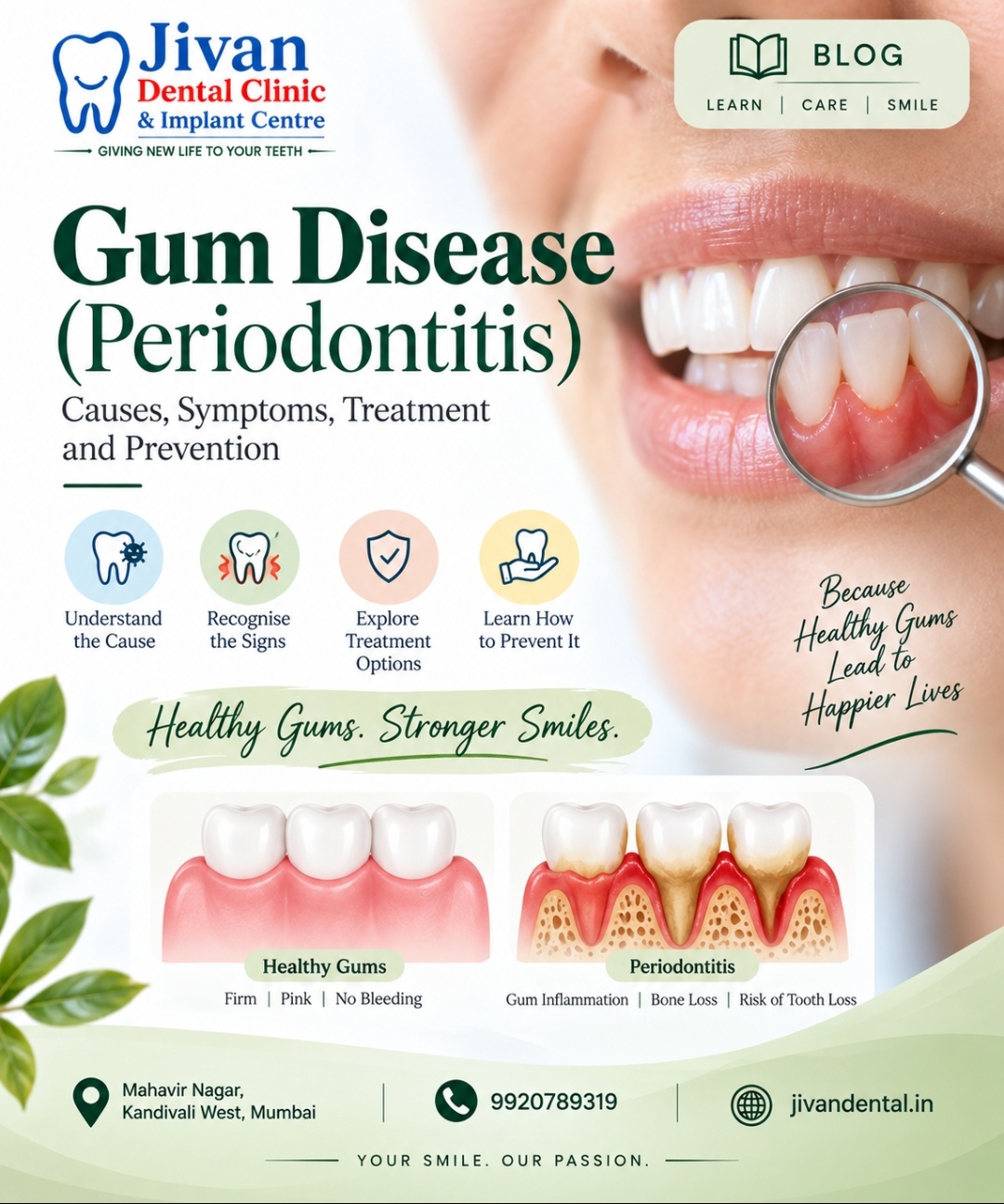
One of the more advanced forms of gum disease is periodontitis. It is a chronic infection and inflammation of the tissues supporting the teeth. If left untreated, it can gradually damage the gums and bone around the teeth and may eventually lead to tooth loss.
The good news is that periodontitis can often be controlled and managed effectively when detected early.
What is Periodontitis?
Periodontitis is an advanced form of gum disease that affects not only the gums but also the tissues and bone that hold your teeth in place.
It usually begins with gingivitis, where plaque builds up around the teeth and causes inflammation of the gums. At this stage, the condition is generally reversible with proper oral hygiene and professional dental care.
When gingivitis is neglected, the inflammation can progress deeper around the teeth. Spaces called periodontal pockets can develop between the gums and teeth. Bacteria accumulate in these pockets, causing further inflammation and gradual destruction of the supporting tissues and bone.
What Causes Gum Disease?
The most common cause is dental plaque—a sticky layer of bacteria that continuously forms on the teeth.
When plaque is not removed properly by brushing and cleaning between the teeth, it can harden into tartar (calculus). Tartar cannot be removed effectively with a toothbrush and usually requires professional cleaning.
Several factors can increase the risk or severity of periodontitis:
- Inadequate oral hygiene
- Smoking and tobacco use
- Diabetes and poor blood sugar control
- Family history of gum disease
- Stress
- Certain medications
- Hormonal changes
- Poorly positioned or crowded teeth
- Inadequate dental restorations that make cleaning difficult
It is important to understand that gum disease is not simply a problem of “dirty teeth.” Individual susceptibility and overall health also play an important role.
Signs and Symptoms of Periodontitis
Gum disease can progress quietly, sometimes without significant pain. This is why regular dental check-ups are important.
Some common warning signs include:
1. Bleeding gums
If your gums bleed regularly while brushing or cleaning between your teeth, don’t simply stop cleaning the area. Bleeding can be a sign of gum inflammation and should be evaluated.
2. Red, swollen or tender gums
Healthy gums are generally firm and do not remain swollen or painful.
3. Persistent bad breath
Bad breath that continues despite brushing and mouth cleaning may sometimes be associated with gum disease.
4. Gum recession
You may notice that your teeth appear longer because the gums have moved away from the teeth.
5. Loose or shifting teeth
As periodontitis progresses, the supporting bone and tissues around the teeth may be damaged. This can cause teeth to become mobile or change position.
6. Pus or discharge around the gums
Pus around a tooth or gum swelling can indicate an active infection and requires professional evaluation.
7. Changes in your bite
If your teeth suddenly feel different when you bite, or food gets trapped in areas where it previously didn’t, it may be worth having your gums checked.
Can Periodontitis Be Cured?
This is an important question.
Unlike gingivitis, the bone that has already been lost because of periodontitis generally does not simply grow back on its own. However, appropriate treatment can control the infection, reduce inflammation and help prevent further destruction.
The goal is to create a healthy environment around the teeth and maintain it over the long term.
Treatment depends on the severity of the disease.
How Is Periodontitis Treated?
Professional Cleaning
For early gum disease, professional removal of plaque and tartar along with improved home care may be sufficient.
Scaling and Root Planing
When deeper periodontal pockets are present, deep cleaning (scaling and root planing) may be recommended. This removes deposits and bacterial contamination from below the gum line and smoothens the root surfaces.
Periodontal Surgery
In more advanced cases, non-surgical treatment may not provide adequate access to deep periodontal pockets. Flap surgery or other periodontal procedures may then be considered to allow better cleaning and management of the affected areas.
Regenerative Procedures
In selected cases where there is specific patterns of bone loss, procedures such as guided tissue regeneration, bone grafting or other regenerative techniques may be considered.
Not every patient requires these procedures. The treatment plan should be based on a detailed periodontal examination and appropriate radiographs.
Maintenance Therapy
Treatment does not end when the gums stop bleeding.
Periodontitis is a condition that requires long-term maintenance. Regular periodontal check-ups and professional cleaning, along with good daily oral hygiene, can significantly help in maintaining the results of treatment.
Why Is Periodontitis Important Beyond the Mouth?
The mouth is connected to the rest of the body, and oral health is an important part of overall health.
For example, people with diabetes can have a greater risk of developing severe gum disease, while uncontrolled gum inflammation can make diabetes management more challenging. This is one reason why maintaining healthy gums is particularly important for people with diabetes.
Research also continues to investigate associations between periodontal disease and several systemic health conditions. However, it is important not to assume that treating gum disease will automatically prevent or cure other medical conditions.
Can Gum Disease Be Prevented?
In many cases, the risk of gum disease can be reduced with simple, consistent habits.
Brush twice a day: Use a soft-bristled toothbrush and fluoride toothpaste.
Clean between your teeth: Brushing alone cannot effectively clean every surface. Dental floss or interdental brushes can be useful depending on your individual needs.
Don’t ignore bleeding: Regular gum bleeding is not something you should consider “normal.”
Avoid tobacco: Smoking and tobacco use significantly increase the risk of periodontal problems and can also affect healing.
Manage diabetes: If you have diabetes, maintaining good blood sugar control is important for your overall and periodontal health.
Visit your dentist regularly: Gum disease can progress without causing obvious symptoms. A professional examination can identify problems before they become severe.
When Should You See a Periodontist?
If you have persistent bleeding gums, gum recession, loose teeth, deep pockets, repeated gum swelling or significant bone loss, you may benefit from an evaluation by a periodontist—a dental specialist focused on the gums and supporting structures of the teeth.
A periodontal examination may include checking gum pockets, tooth mobility, gum recession and radiographs to assess the supporting bone.
Takeaway
Healthy gums are the foundation of a healthy smile.
Periodontitis may develop gradually and sometimes without pain, but the damage can become significant if it is ignored. The earlier gum disease is detected, the easier it generally is to manage.
If your gums bleed regularly, your teeth feel loose, your gums are receding or you have persistent bad breath, don’t wait for pain to appear. A simple periodontal examination can help identify the problem and determine the appropriate treatment.
At Jivan Dental Clinic & Implant Centre, Mahavir Nagar, Kandivali West, we provide periodontal care ranging from preventive gum care and professional cleaning to advanced periodontal procedures, depending on the individual patient’s needs.
GIVING NEW LIFE TO YOUR TEETH 🦷 Your Smile. Our Passion.